Asynchronous Cooking
Published on 4/10/2026
•8 min read
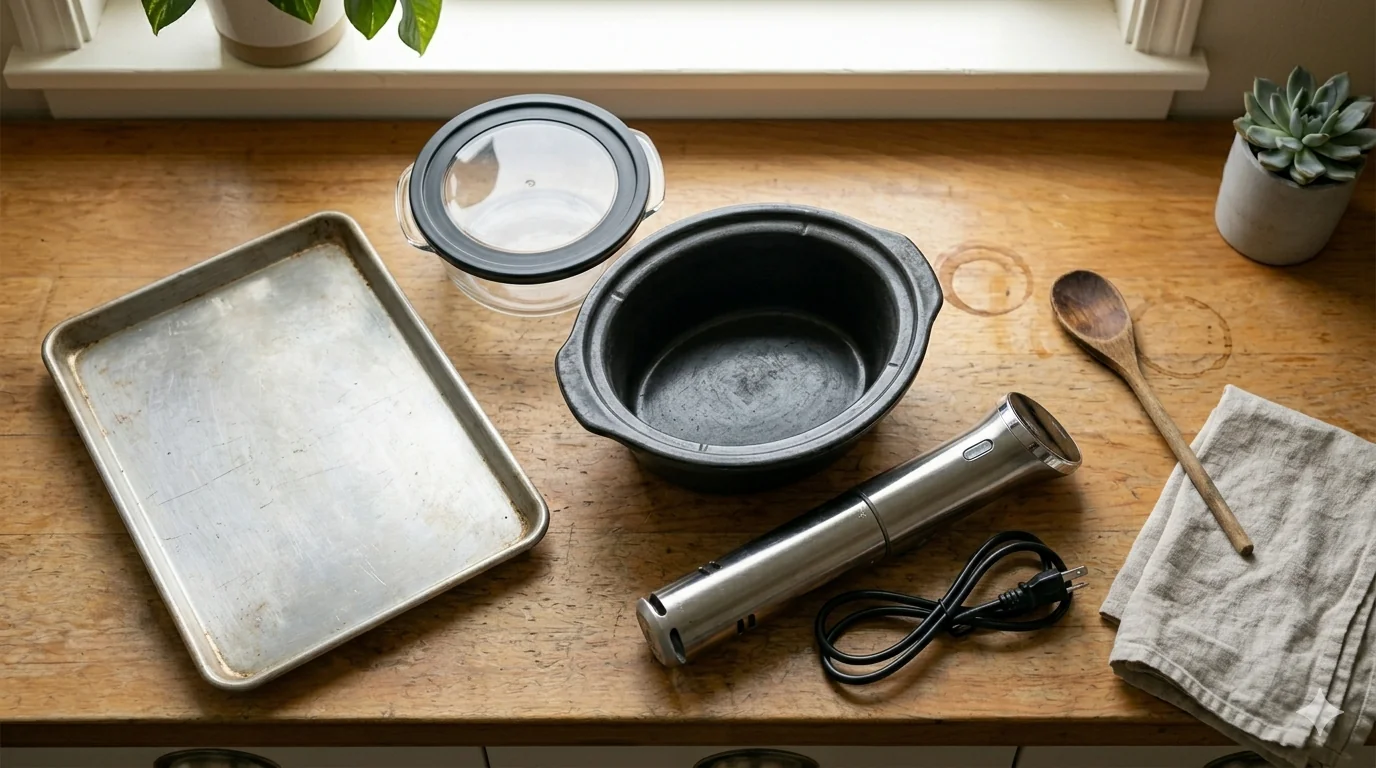
•Asynchronous cooking is a meal preparation approach that decouples your attention from the cooking process — you start a meal, walk away, and return when it is done. Unlike stovetop cooking that requires you to be present and attentive, methods like sous vide, slow cookers, and oven roasting work in the background with little to no monitoring. The result is dinner that is ready when you are, not the other way around.
I had a pork tenderloin in the sous vide and I was running late.
Not catastrophically late — just the kind of late that happens when you have a toddler and dinner was supposed to be on the table twenty minutes ago. And then I realized: it doesn't matter. The pork had been sitting at 140°F for two hours. It could sit there for another hour. It would be fine.
That was the moment I started thinking about cooking differently.
What Async Cooking Actually Means
In software, asynchronous means you kick off a process and move on — you don't sit there blocking while you wait for it to finish. The work happens in the background. You come back when it's done.
Most people cook synchronously. They stand at the stove, they watch the pan, they time things to converge at exactly the right moment. That works fine if you have uninterrupted control of your schedule. It falls apart completely when you have a toddler who picks dinnertime to need an emergency bath.
Async cooking is about choosing methods that decouple your attention from the cooking process and the done time. Total cook time doesn't change — but active, I-have-to-be-here-for-this time drops dramatically. The food handles itself. You show up when it's ready, or when you can.
Here's what that looks like in practice.
Sous Vide: The Holding Superpower
Sous vide gets talked about as a precision cooking tool, and it is — but that's not why I use it. I use it because of what happens after the cook time ends.
When something is sous vide, it stays at temperature. A pork tenderloin that's done doesn't overcook. It just... waits. That pork I mentioned? It could have sat in the water bath for another two hours and basically been identical. The sous vide doesn't punish you for being late. That's the feature.
I use the Breville Joule with the app, which means I can start it from my phone and monitor it without being in the kitchen. The recipes are basic — mostly proteins, mostly chicken breasts, pork tenderloins, the occasional steak. The technique is the point, not the recipe.
Start the bath, drop in the protein, walk away. When you're ready to eat, pull it out, pat it dry, sear it hard in a hot pan for two minutes. You get a perfect interior every time and a nice crust. Or if it's going into a stir fry or pasta, jut cut it up and add it in. The whole active portion of cooking is about ten minutes including cleanup.
The Slow Cooker: Low Effort, High Tolerance
The slow cooker is in use at least once a week in our house, and it earns its counter space every time.
The two properties that matter most are things that sound like limitations but aren't: it's slow, and it has a wide window of "done." A soup that says it needs eight hours is often fine at six or fine at ten. That time variance is a feature. It means dinner is ready when you are, not the other way around.
Some of the things I make regularly:
- Italian lentil soup — everything in, walk away
- White bean soup with turkey sausage — same
- Italian roast pork — I use pork tenderloin instead of shoulder for leaner meat, and with a quick chop it shreds perfectly
The slow cooker also handles proteins that would otherwise tie up the stove. Ground turkey or chicken can go straight in with some liquid and seasoning and cook down into something useful. No browning required, no standing over a pan.
One use that surprised me: reheating frozen soups. I freeze soups in half-gallon containers. I put a little water in the bottom of the slow cooker, set the frozen soup block in, and turn it on low for a few hours. An occasional stir is all it needs. By dinnertime, it's hot and ready. No stirring a pot, no worrying about scorching the bottom, no timing it to the minute.
The Oven: Trading Attention for Time
Pan-cooking chicken is faster. Roasting chicken takes 45 minutes. But those 45 minutes are yours.
When something is in the oven, you're not doing anything. You set a timer and you leave. That's not wasted time — that's 45 minutes you can spend with your kids, or finishing work, or doing literally anything else. The oven is the original async tool. We just stopped thinking of it that way.
The mental shift is this: when you're deciding how to cook something, factor in what you're trading. Pan-cooking is faster but you're present the whole time. Roasting is slower but the oven is doing the work. If you have things to do during that window — and you probably do — roasting wins.
I even use it for ground meats. I'll spread a few pounds of ground turkey or chicken on a sheet pan, season it, and roast it. It comes out cooked through and with a little chop or crumble it's ready to use in tacos, pasta sauce, or soup. No browning required, no standing over a pan.
This applies beyond just proteins. Vegetables roast beautifully in the oven while something else is happening. Sheet pan dinners exist for exactly this reason.
The Microwave: The Underrated One
The microwave has a reputation as a reheating tool. It's actually one of the most useful hands-off cooking tools in the kitchen, and most people underuse it.
Pasta: I make pasta in the microwave more often than not. Plain glass bowl, microwave-safe cover, pasta submerged in water by about an inch, ten minutes on high, check and continue from there. It doesn't boil over. It doesn't require a watched pot. It doesn't heat up the kitchen. It's not dramatically slower than the stove, and no open flame means it's safer around kids.
Vegetables: Before they go into a stir fry or a soup, I often microwave vegetables first to soften them. Peppers and onions for fajitas, carrots for a stew, broccoli before it hits a pan. The microwave cuts the sauté time significantly and means the stovetop portion is finishing and browning, not cooking from raw. Less time on the burner, less mess, less attention.
The general principle: the microwave softens things fast so the stove doesn't have to. Use it as prep, not just reheating.
Async Cooking Tools at a Glance
| Tool | Active Prep Time | Unattended Cook Time | Best For | Difficulty | Approx. Cost | |---|---|---|---|---|---| | Sous Vide | 5–10 min | 1–4 hours | Proteins (chicken, pork, steak) | Low | $80–$200 | | Slow Cooker | 10–15 min | 6–10 hours | Soups, stews, braises | Very low | $30–$80 | | Oven / Sheet Pan | 10–15 min | 25–60 min | Roasted veg, proteins, ground meat | Low | Already owned | | Microwave | 2–5 min | 8–15 min | Pasta, pre-softening vegetables | Very low | Already owned | | Instant Pot | 10–15 min | 20–60 min (pressure) | Beans, grains, fast braises | Medium | $80–$150 |
Why This Matters More With Kids
All of this matters for anyone who wants to spend less time hovering over a stove. It matters more if you have young children.
A tantrum doesn't care that the chicken is about to burn. A surprise diaper situation doesn't pause for the pasta water. If your cooking method requires you to be present and attentive at a specific moment, you will eventually be somewhere else at that moment. That's not a failure of planning — that's having kids.
Async cooking methods have tolerance built in. They don't punish interruptions. The food waits for you, not the other way around. That's not a small thing when dinner is one of several things happening at once and exactly zero of them are going according to schedule.
The goal isn't to cook less. It's to be present less while the cooking happens — and to show up at the end for the part that actually requires you.
Frequently Asked Questions
- What is asynchronous cooking?
- Asynchronous cooking is a meal preparation strategy that decouples your active attention from the cooking process. Instead of standing at the stove, you configure an appliance — a slow cooker, sous vide circulator, or oven — and let it run while you do other things. The food finishes on its own schedule, and you return when it is ready or when you can. Total cook time stays the same; active, hands-on time drops dramatically.
- What equipment do I need to start asynchronous cooking?
- The three most useful tools for asynchronous cooking are a sous vide circulator for precise, hands-off protein cooking, a slow cooker for soups and braises that can run for six to ten hours unattended, and a standard oven for roasting vegetables and meats without any monitoring. A microwave is also underrated as a prep tool — it softens vegetables and cooks pasta without requiring you to watch a pot. None of these tools are expensive and all are widely available.
- How much time does asynchronous cooking save per week?
- Asynchronous cooking reduces active kitchen time by roughly 60–80% compared to traditional stovetop cooking. A slow-cooked meal that takes eight hours total may require only ten to fifteen minutes of hands-on prep. A sous vide protein needs about five minutes to bag and start, then zero attention until searing at the end. Over a week of four to five home-cooked dinners, this can recover an hour or more of time that would otherwise be spent standing at the stove.
- Is asynchronous cooking suitable for meal prepping?
- Yes — asynchronous cooking methods pair naturally with meal prep because they produce large batches with minimal active effort. A slow cooker can make a double batch of soup in the same time as a single batch, and most soups freeze well. Sous vide proteins can be cooked in bulk and refrigerated for the week. The result is a fridge stocked with ready-to-reheat components that make assembling weeknight dinners take under fifteen minutes.
- What meals work best with asynchronous cooking techniques?
- Soups, stews, and braises work best in a slow cooker because they benefit from long, low-heat cooking and have a wide window of doneness. Proteins like chicken breast, pork tenderloin, and steak work well sous vide because the water bath holds them at temperature without overcooking. Roasted vegetables, sheet pan dinners, and ground meats work well in the oven because they need no monitoring once the temperature is set. Pasta and pre-softening vegetables work well in the microwave as a prep step before a short stovetop finish.